
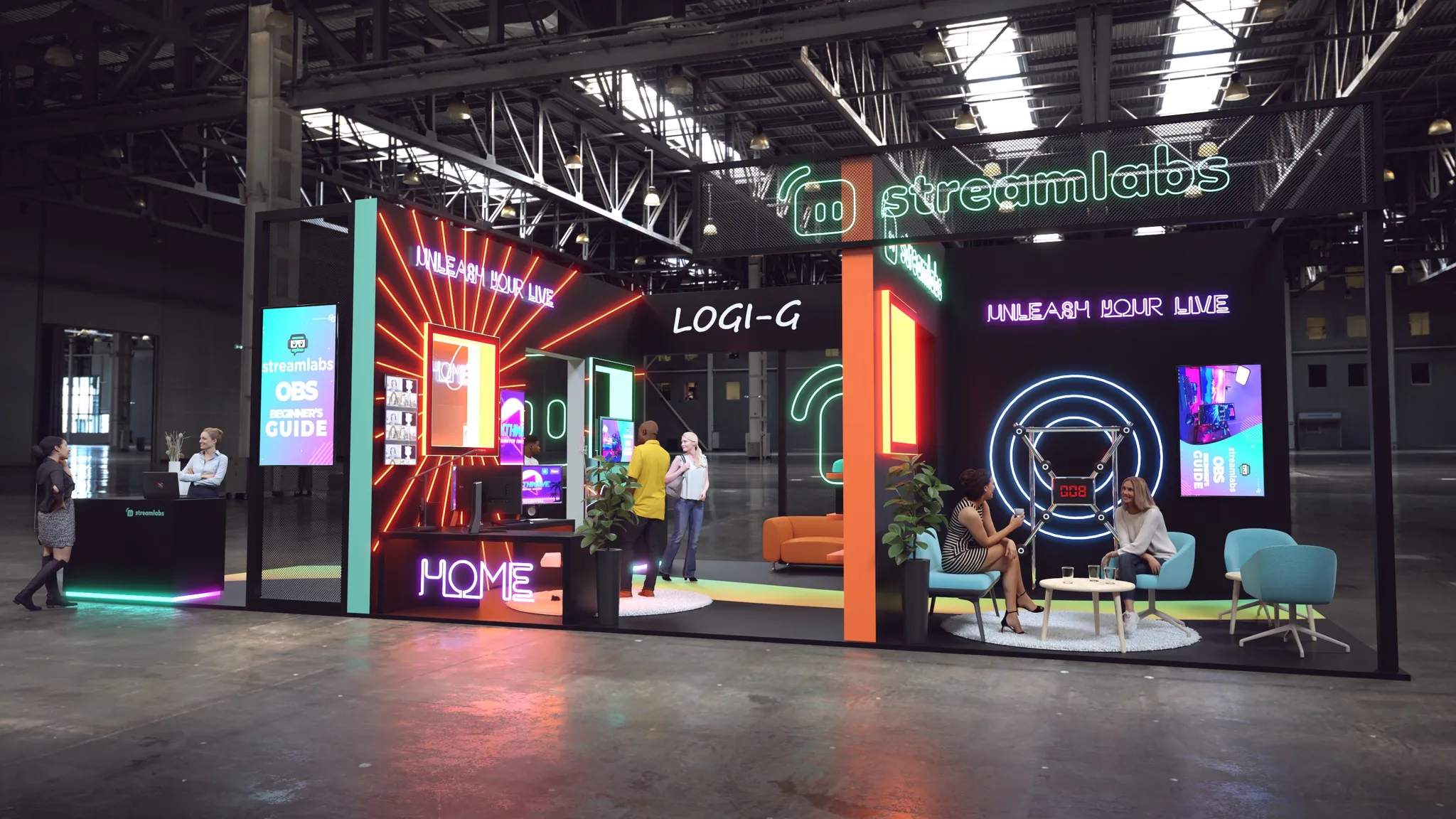
A 10x20 trade show booth in Irvine, CA gives an exhibitor about 200 square feet of inline space, typically two standard 10-foot units side by side with one long open face at the aisle.
That extra length changes the design problem. Instead of fighting for room, a 10x20 can carry a real demo zone, a seated meeting area, a product wall, and a back-of-booth storage closet without feeling crowded.
Trade Show Services of Irvine builds 10x20 programs for teams stepping up from a 10x10, weaving in the Irvine Spectrum and Great Park venues where mid-size booths and brand activations tend to concentrate.
Execution priorities
- the 20-foot run should be zoned, so demo, meeting, and storage each have a place.
- the backwall graphic should hold together as one image across the full length.
- lighting should be planned for the longer wall, not simply centered on one panel.
- the build should break into crates that match the venue's dock and freight windows.
Why teams step up to a 10x20
The jump from a 10x10 to a 10x20 is usually about function, not vanity. Two hundred square feet is the point where a booth can host a live demo and a private conversation at the same time without the two colliding.
Irvine's mid-market exhibitors, tech firms, and product companies often land here. It reads as a serious presence on the floor while staying well below the cost and labor of an island.
Spectrum and Great Park venues for a 10x20
The Irvine Spectrum and Great Park belt is a natural home for 10x20 work. The Marriott Irvine Spectrum carries nearly 18,000 square feet of indoor and outdoor event space with an event lawn and full audiovisual production services, which suits a booth that wants a demo and an AV element.
Nearby, the Courtyard by Marriott Irvine Spectrum lists 7,890 square feet across five event rooms plus an event lawn, useful for conference spillover and receptions where a 10x20 anchors the room.
Great Park Live, a community and live-music venue that can hold a crowd of 5,000, is the kind of activation space where a 10x20 brand presence works alongside programming rather than on a traditional show floor.
The case for a local build on a 10x20
A 10x20 has more parts than a 10x10: a longer backwall, more lighting, often a counter and a demo fixture. More parts means more places a national vendor's shipping-and-pray model can go wrong.
Trade Show Services of Irvine keeps fabrication and graphics local, so a damaged panel or a late content change is a same-week fix instead of a cross-country reprint.
Repeat 10x20 programs get cheaper over time. Once the structure, crates, and graphic templates exist, each new Orange County date is mostly a graphics refresh and a labor call.
Labor, power, and rigging for a 10x20
At 200 square feet, a 10x20 usually needs a short install crew, a power drop or two, and sometimes a hanging sign where the venue allows one. Each of those follows the building's published rules.
Hotel and fairgrounds venues across Orange County control power, internet, and rigging through their own desks, so the orders go in against posted specs and the labor is scheduled inside the venue's move-in window.
A 10x20 with a video element needs its power and data planned early. Guessing at the drop location is the most common way a smooth install turns into a show-morning scramble.
Where 10x20 booths cluster in Orange County
The Irvine Spectrum and Great Park growth belt sees a lot of 10x20 brand and product work, often tied to entertainment and newer South County meeting demand.
The Irvine Airport and Business Complex core covers the corporate and conference side, while the South Coast Metro and Newport corridor adds fairgrounds and airport-hotel inventory where a 10x20 fits comfortably.
What a 10x20 project includes
A 10x20 scope typically covers a long backwall, a demo or product fixture, a counter, lighting tuned to the full run, graphics, AV if there is a screen, and a storage area built into the design.
Line items usually include the booth structure (custom or rental), graphics and print, AV and lighting, show-service orders for power and data, labor against the venue's rules, freight both ways, and on-site supervision.
Handoffs are where a 10x20 protects or loses its quality. Design hands a build-ready drawing to fabrication, fabrication dry-fits the full 20-foot run before crating, and the crates ship labeled so install follows a plan instead of improvising.
The scope also names what sits outside it: organizer fees, staff travel, and client-owned tools like lead-capture platforms or CRM integrations that run alongside the booth.
How a 10x20 project runs
The same four inputs start it: venue, show dates, the 10x20 footprint, and the target outcome. From there a real plan and a realistic cost come back.
Venue coordination follows: pull the current exhibitor manual, confirm dock and freight windows, place power and data orders, and submit any rigging approval the building requires.
Production builds the structure, prints the graphics, stages the AV, and assigns the named lead who will run the floor on install day.
Install is owned by that single lead, who works the punch list in real time. Through show hours the team handles repairs, sponsor requests, and venue questions, then strikes, crates, and delivers a short closeout report.
Cost and lead time for a 10x20
A 10x20 costs more than a 10x10 but far less than an island. The number tracks custom versus rental, the graphics package, the AV, what the venue charges for its services, and how far the crates travel.
Lead time runs about 8 to 12 weeks for a custom 10x20 and 6 to 8 for a rental configuration. Work inside four weeks is possible but raises cost and limits choices.
For repeating programs, the smartest spend is on a reusable structure with rotating graphics, which turns each subsequent Orange County show into a much smaller invoice.
Frequently asked questions
What is the real difference between a 10x10 and a 10x20?
Room to separate jobs. A 10x10 forces one message into about 100 square feet; a 10x20 doubles that to 200, which is enough to give a demo, a seated conversation, and hidden storage each their own zone instead of stacking them.
Is a 10x20 considered an inline or an island booth?
It is an inline. A 10x20 sits in a row with one long 20-foot open face at the aisle and neighbors behind and often to one side. An island is open on all four sides, which is a different design and labor problem.
Does a 10x20 need a hanging sign?
Only if the venue allows one and the design calls for it. Many Irvine hotel ballrooms restrict rigging, while exhibit halls and fairgrounds buildings are more open. We confirm the rule before designing anything overhead.
How much labor does a 10x20 install take?
Usually a short crew rather than a single person, depending on the build and the venue's labor rules. We scope the labor call against the building's published categories so there are no surprises at the dock.
Can a 10x20 include a video wall or large screen?
Yes, and it is a popular choice on the Spectrum and Great Park circuit. The key is planning power and data placement early so the screen has a clean feed and the booth passes inspection on the first walk.
How long does a 10x20 take to produce?
About 8 to 12 weeks for a custom build and 6 to 8 for a rental setup. Rush work inside four weeks is possible but raises cost and narrows the structure and graphic options.
Will a 10x20 work at both a hotel ballroom and a fairgrounds hall?
Yes, when it is built modular. The same 10x20 can run at the Marriott Irvine Spectrum and at OC Fair & Event Center, because the structure breaks into crates that fit different docks and the graphics swap per show.